Wednesday, May 21, 2014

How Canada had it all and gave it away....

by Manfred Rieder


In 1950 Avro Canada's Jetliner created a sensation by flying from Toronto to New York in half the time usual for even the most advanced piston engined planes of the time. It was the second (by two weeks) pure jet in the world, being narrowly preceded by Britain's Comet. That same year it flew from Chicago to New York in one hour and 40 minutes at 459 miles per hour. At this time, United States pure jet technology was only in the early drawing stages. In light of the many problems the Comet experienced, the C-102 Jetliner should have and probably would have been the rightful successor of the venerable DC-3.
The Jetliner flew flawlessly for two years without one single problem in its operation. However, the project was abandoned even while TWA and the United States air force were placing orders of 30 and 20 units respectively. Canada's "brilliant" Cabinet minister C.D. Howe argued that any aircraft which needs sandbags for stability was not viable. Every aircraft of that time used sandbags to test weight distribution and stability. The designer, James Floyd, was awarded the Wright medal for his brilliant design, the first non North American ever to win this Nobel prize of aviation.
In a further grievous act of stupidity, the original CF-EJ-X was scrapped even after having received another firm order from National Airlines and great enthusiasm from the U.S.A.A.F. The Canadian government did not even allow a museum to have it and even an invitation to keep it at the Smithsonian Institution was denied. Today, all that is left of this magnificent Canadian machine is the nose which can be seen at the National Aviation Museum.
I am certain that the good people at Douglas, Boeing and Lockheed must have been laughing their heads off at the time.
And then - well nine years later, precisely on February 20, 1959, they did it again and scrapped the Avro Arrow.


As the Toronto Daily Star reported on this "day of Infamy in Canadian Aviation": Prime Minister Diefenbaker Decides "Scrap the Arrow"
The text reads: 
Ottawa, Feb,20 - The federal government has scrapped the Avro Arrow and its Iroqouis engine, Prime minister Diefenbaker announced in the House of Commons today. At the same time, the prime minister made it clear that the government has no alternative air defense system planned to take the place of the supersonic jet interceptor.
By the end of the day the 14,000 employees of A.V. Roe and the Orenda engine companies were out of work.
What could have been the greatest moment in the history of Canadian technology became the greatest aviation tragicomedy of all time. Almost 80 percent of the laid-off pool of aviation talent were snapped up by U.S.companies, a loss Canada was never able to recoup.
And what of the Arrow? It flew faster and higher than any other interceptor then built. For the first time, Canada was poised to take a position of leadership in the global aviation field. To add insult to injury, the government also decided to shred all documents pertaining to plane and engine and to destroy the fleet altogether. There is not one single Arrow to show the world today.
Considering the fact that subsequent governments have had to purchase all their planes such as the CF-18 Hornet from the U.S., and that Canada is now poised to spend billions on a new strike fighter program, I say it serves them right....

How One Person Can Make a Difference - the Green Mountain Farm-to-School Project


By Manfred Rieder

Katherine Sims is the wife of my friend Jeff Fellinger. She is also the founder and executive director the the Green Mountain Farm-to-School project. At the last Vermont election she ran for a seat at the state house but narrowly lost. Will she run again" "Yes I shall", she told us yesterday, May 20. "But not for a while because I have to focus all of my energy on the Farm-to-School program and right now this is where I can make a difference and do some good". this might not be a direct quote but it encompasses the gist of our conversation and it embraces all that this young woman is all about.
She is only 32 years old, a Yale graduate and she started the Farm-to-School project six years ago at an age when a lot of people would worry more about spring break than the common good that can be accomplished by a single determined person.
When she started they had one school and one garden, now there are 28. Acting as brokers for farms throughout the Northeast Kingdom, the project now delivers food to more than 90 customers which encompass schools, hospitals, the State prison systems and senior meal sites.Sims and her elves contact participating farms every week to find out what produce, meats or vegetables are available. The project partners with a local warehousing and distribution company, DNS distributing, to gather and deliver the food. Four trucks are in constant use.
12,500 tons of food have been delivered - a staggering number considering that this grass-roots organization is working on limited funding albeit there are state and federal grants allocated but a lot of work is done by local volunteers.
I asked Katherine is there is anything she would like to see in this little story and she told me to give the phone number: 334-2044 so any person of any age who would like to volunteer for the program may contact them. Right now what they need is people who can help with weeding, harvesting and assistance with educational programs that are evolving as the organization grows. "Right now we have about ten percent of the schools in our program and we would like to grow that number" asserts Mrs Sims.
A recently published brochure summarizes the mission of the Farm-to-School project; "By delivering local foods to schools and institutions, we can make healthy food accessible and affordable for all while simultaneously supporting the local economy."
In the 2012 to 2013 school year the group sponsored and conducted 29 field trips for students to local farms, planted 25 new school gardens, produced 3,938 pounds of food for school cafeterias and involved 5,316 students in the planting of the gardens. They also held 519 in-class workshops and instituted 324 after-school programs.
Now, the newest development is the "Lunchbox", a mobile farmer's market and commercial kitchen that brings locally grown food and food-based education to communities in Northern Vermont. Here we quote from their pamphlet: "The market's mission is to improve fresh food access, provide a reliable outlet for new and small-scale growers and value-added producers, and to create a gathering place for community activities and meals." The market also offers free meals to all children under the age of 18. The three main centers for the "Lunchbox", a large Freightliner truck, staffed by a chef, an intern and an educator, are Newport, Barton and Island Pond.
There will be a big Block Party in Newport's Gardner Park in June to launch this year's "Lunchbox" program in June. For more information about Green Mountain Farm-to-School you may go to their site at:
www.GreenMountainFarmtoSchool.org


The Art of Making a Small Picnic Table:


By Manfred Rieder

Benjamin J. Farney (30) of Newport is a certified professional tree climber. Last week he came to our home and politely asked me to remove my 30 year old Chrysler from the back of our home because my neighbors had engaged him to take down two huge maple trees which had become a nuisance. I should know because at the last storm one branch dented the aforementioned old car and the trees were simply becoming too dangerous to keep alive.
Now, we had trees taken down before, especially when we lived in Sutton, Quebec. Normally our experience was one older gentleman with suspenders and a rusty pickup truck would show up, crank up one ancient two stroke chain saw and let it rip...Not so this time. Mr. Farney is a consummate professional and watching him work for a full day was enlightening. The $ 250.-/day rented man-lift was the "operating theater" and when he first ascended to some 70 feet up and began to carefully trim the branches, every single time shouting "clear" to his assistant Wyatt Wilson, it became a ballet of sorts, a well crafted exercise without fanfare or drama. There was the simple joy to watch two men do a job and do it well.
Gradually the first tree was reduced to about 30 feet of majestic trunk and section by section it came down until there was nothing left than a large elegant stump protruding a few inches above the ground.
When the job started on the second tree we asked the men if it were possible to leave about three feet of trunk for us to use as a picnic table because my lovely neighbors had granted us permission to have a small rock garden in the corner of their grounds which abut our property. There I have to mention that my flower and herb beds were directly under the about to be eliminated maple tree # 2 and amazingly, not one single flower or stalk of chives has damaged by the operation. Those people were amazing.
Benjamin started his professional career as a logger and eventually got his certification as a licensed tree climber after which he started his own company two years ago. But he does not just chop down trees - his main profession as an arborist is actually tree maintenance. He works with ornamentals, trims fruit trees and will soon give a seminar at the Northwoods stewardship center for other people who would like to know more about forest preservation. Eventually he wants to establish a school for tree climbers and arborists.


In our home we have a large wall mural of trees and even some ornamental branches to give the wall dimension. When Benjamin agreed to visit with us last Saturday, he used this wall as a teaching tool to explain about the intricacies of the rope work required to "rig down" branches. Benjamin uses the double rope technique and will not use the traditional spikes because, in his own words: "I will not intentionally hurt a tree". This of course is when a tree is to be pruned or preserved but even when he cuts down a tree like the two maples, he gives the tree, a living thing older than himself, a great degree if dignity. There is use to be made of the wood, either as timber, which some of the larger logs will be milled for, or a fire wood. Thus, just cutting a tree down and leaving a mess is not in the repertoire of this man. Everything was stacked neatly and by size, branches where whisked away by truck and by the end of the day the landscape looked clean and neat.
"Climbing is addictive" tells Ben. "But every move has to be calm and calculated otherwise you get in trouble really quick". Thus far he has never got injured but this is in part the result of his studied technique and the superb tools of his trade. He will only use the very best in ropes, carabiners and harness gear and has a large amount of money invested in the best saws money can buy.
When asked about which trees he prefers to work with , the answer was hard woods. A maple or an oak is predictable, most evergreens are not, they have mostly shallow roots while hardwoods have stronger structural root systems. Ben also does not like to work around life wires and while he will gladly accept a job that involves a tree next to the electric grid, he will insist that power be cut before he will attempt the job. However he stated that often jobs of this nature will be taken care of by the power companies possibly at no cost to the home owner.
And at the end of the day we had made a new friend and gained a picnic table!


Wednesday, April 23, 2014

New Signs of Life in Down-town Newport City


By Manfred Rieder
Now that is officially spring even though this Wednesday morning there were freezing gusts coming from the lake and whitecaps foaming against the shore, there seems to be new life coming to downtown Newport City. Next to the Boutique Unique which stared last fall and seems to be thriving, there will be a new clothing store and next door Largo Trattoria has a sign in the window announcing a new Fudge and Candy store. All good news for a downtown which has lost a lot of businesses in the last year alone.


Tuesday, April 22, 2014

The Railroad to Sutton and Newport

The Railroad to Sutton and Newport - a historical review


By Manfred Rieder

Note: I wrote this some time ago and now that I once again live next to this railroad's track, I thought it would be fun to re-write it some for my friends:
Note: Some quoted text and all the pictures are courtesy of the Sutton Museum.

In November of 1871, the South Eastern Counties Junction Railway's first passenger train pulled into the Sutton station. Having left Richford, VT, 20 minutes earlier (6:10a.m), it was on its way to Montreal where it would arrive at 9:50 a.m. This train would stop in several small villages such as Sutton Junction, West Brome and Cowansville. Travelers could now travel into Montreal and catch the same train in the early afternoon and be back in Sutton in time for dinner. This flash visit to Montreal would have previously been impossible, considering that getting to Montreal would have taken anywhere from 12 to 14 hours at that time.


It had taken two years of surveys and almost a full year of construction to erect this new line that now connected this southern area of the Townships with "the rest of the world" and until the last passenger train arrived in Sutton in 1969, the railway drastically changed life in Sutton. Suddenly, jobs in Cowansville and Abercorn beckoned, jobs not accessible before, as there was only horse and buggy transportation and the distances and weather as well as road conditions made such a commute unthinkable.
It is interesting to see that Sutton was then called "Sutton Flats" and a short time after the railroad began its regular service to the region, the main station, repair shops and freight forwarding, was actually done in Sutton Junction, now a mere hamlet, but at the beginning of the 19th century, home to hundreds of people who directly or indirectly worked for or benefited from the "Junction Railway".
Another novelty of this train was daily mail delivery. A special postal wagon was attached to the train and was described by a Montreal journalist of "The Gazette" who was traveling on the inaugural trip, as being: "… well furnished with pigeon holes and with other equipment for facilitating Post Office work ". Not only did this service accelerate the delivery of mail between Montreal and the different small towns, but also between the towns themselves.
The local merchants had, for the first time, access to wares unheard off in town, farming equipment could rapidly be delivered or sent out for repairs and a whole travel industry sprang up belivering Sutton and Abercorn residents to the Winter Carnival in Montreal or special picnics and events throughout the region. On those occasions the railroad would print pamphlets and lay on a special train to accomodate the events.
The railway also allowed Sutton producers to export excess produce such as milk, vegetables, maple sirop and wood. Mr. Naaman O'Brien, for instance, sold his maple products all over Canada and beyond. In this leaflet Mr. O'Brien informs potential buyers that with the train transportation, a shipment of 90lbs of maple products going from Sutton to Winnipeg would cost an extra $2.80, which would be billed to the buyer.
A veneer mill and a huge casket factory operated in Sutton at that time and almost all of their products were shipped out via train. Another company, which benefited greatly from the train, was the "Darrah Brothers Company" of Sutton established in 1922. This company built tool shafts for American and Canadian companies and transformed the walnut needed by the Australian Company called Slazenger, which made tennis raquets. Later, around 1950, the "Darrah Brothers Company" provided South-African companies with several shafts. All of these products were shipped by train either to their final destination or toward ports for goods going overseas.

And then came the tourists!


In the early part of the 19th century Sutton began to declare itself as a tourist town and actively advertised itself as such and, slowly at first, but steadily growing, a whole new industry sprang up. Hotels were built, at one time (especially during the Prohibition) the neighboring hamlet of Abercorn, had five large hotels, resplendant with big dance halls, bars and restaurants, which could accomodate thousands. And in Sutton visitors had the opportunity to shop in well stocked shops, dine in good restaurants and get horse and buggy and later of course, bus rides up the mountain.
Last year marked the 52nd anniversary of the Belanger family's "Sutton Mountain Ski Center". Lifts were operating and special trains brought the skiers by the carloads and suddenly Sutton had become a real winter destination for thousands. Livery stables were built near the Sutton depot,later bus transport arrived and the rest is history. The ski area was constantly enlarged, walking and hiking trails were groomed everywhere and now there are approximately 300 kilometers of them available in the Sutton area alone.

Skiers arrive in Sutton in 1940

Before Real Boulanger created the current ski mountain, there already existed a simple form of ski center, operated by CP-rail and the town of Sutton. The mode of transport was by a simple rope lift and while there was a steady skiing industry, it was not a great success as it was not substantially improved until the Belangers took the mountain in hand. But at least, they had many years of experience to fall back on and did not have to start an industry from scratch. Also, CP started to lure people to skiing destinations in the Laurentians and it is pretty funny to see Montrealers come to Sutton to ski and Suttonites travel to the Laurentians to do so...
From the day of the inaugural trip in 1871 to the demolition of the station in 1969, the railway changed the lived of the people living in Sutton. Every time the train rolled into town the entire place was buzzing. As Mrs. Drouin, wife of the last station master, put it : "When the railway decided to tear down the station it was as if death itself had come through town".
This stately building in the center of town still stands in its original glory and now houses "La Rumeur Affamee", a long established specialty food store. The building is one of the few old structures which survived the great fire of 1898.Interestingly enough, some of the old-timers in town still call it the "Safford Block".


Today, the railroad continues to run through Sutton twice every night, to the anguish of the population who has to listen to the Montreal, Maine and Atlantic locomotive's screeching horns every night, but the railroad states that the aural warning signals are the law and by operating its freight trains after midnight, they actually assist in staying out of motorists way during the busy daytime hours, where long stops at every road-rail intersection would probably inconvenience more people than the noise created at night. In any case, they own the track, pay the local; taxes on it, it is the law, and both sides of the argument will continue until there is no more trains going through town. For now however, this still is a tread to the past, a reminder what the railroad did for Sutton and, as a railroad enthusiast who lived for 18 years approximately 200 meters from the track, I personally didn't mind the rumble and the slight shaking of the house. Its still out there, as vibrant as it was in 1871 and, for me at least, a joy to see and hear now that I live on the "other end of the line" in Newport, where I can see the train every day again as it crosses the South Bay bridge visible from my porch. I don't seem to be able to escape this railway and even know the numbers of all their engines still operating.

Newport is Getting Ready for Gardening


By Manfred Rieder

The sign on the closed door to the greenhouses at the Newport Agway is self explanatory - two more weeks before anxious gardeners can fill their baskets with pats of annuals, perennials, brushes, trees or every variety of herb that can be grown this far North of the equator. "Because of the long winter we are about three weeks behind this year" explains one of the sales staff at the store. While we were busy taking some pictures at least three customers came and went sadly, dreams of early blooms blown away.
In our own garden the only thing that is stirring is one lonely bunch of chives which has miraculously survived the four feet of snow under which my herb garden has rested until a week ago. Meanwhile we have our seed and flower catalogs to entertain us but at least the local Vista store has a nice selection of potted bulbs which liven up the house until we can grow our own patch of Dandelions:


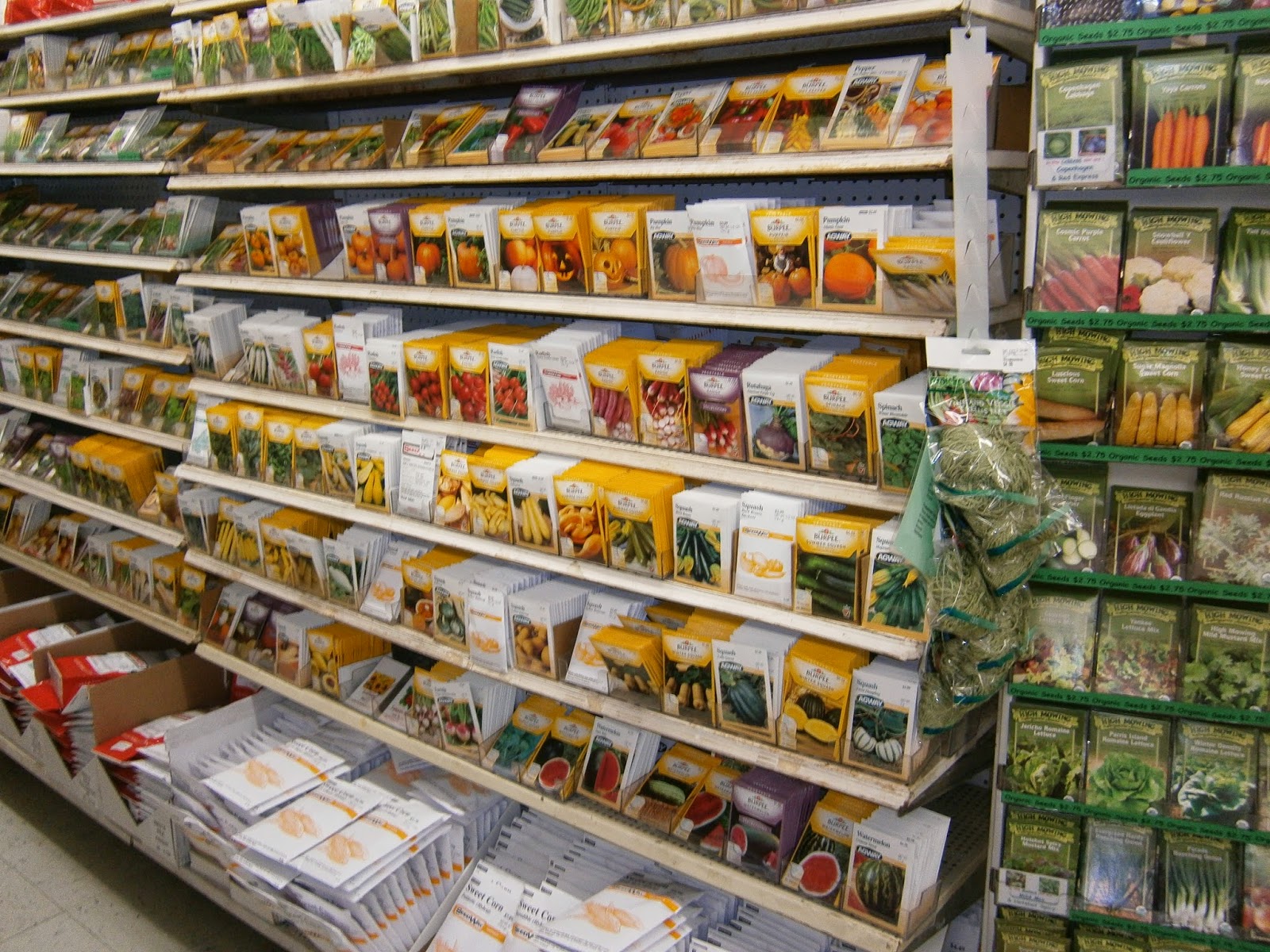
The other area garden centers are in the same boat and their greenhouses are also still closed to the public but everywhere are the enticing stands of seeds which I for one can never resist in buying too many of. I think I planted about 100 beans last year, about 20 made it to some kind of maturity and we probably got just about enough beans for four meals because I planted them to late. I also have a tendency to become a tomato farmer in spring and when I finally get my harvest, all my neighbors want to stick me with their better looking produce.
And then - I cannot resist those lovely glossy catalogs and will shortly receive 100 gladiolus bulbs, 75 daffodils, an assortment of ornamental ferns and by special request of my better half, three blueberry bushes and an orange tree which will be permitted to live on the porch until fall where after it has to be carefully baby-sat until spring. Unfortunately I have a very small garden space but I luckily have a good friend who owns the house next door and had graciously permitted me to infest his much larger green-space with the labors of my not always very green thumb.


For those Newporters who do not care about color or culinary delights but are lawn fanatics, there is good news as well. All the local hardware stores have receives crates of mowers of every size and description ranging from dainty weed trimmers to tank sizes riding mowers some of which look like they could be used in combat in Afghanistan. The new Kubota line and some John Deeres are larger than my antique Ford farm tractor. They are also whisper quiet, have enough power to move small structures and cost almost as much as an economy sedan or small pickup truck. So - if gardening or lawn care is in your mind, polish up the old Visa or Discover card and venture forth - the merchants are ready for you and eager to make your acquaintance. And do not forget to bring home a few dozen seed packets. You never know when they might come in handy.


The Newport Shipping News:


By Manfred Rieder

It is coming: The ice on the lake is almost all gone and the town of Newport is preparing for the upcoming sailing season. After years of no public lake transport, last year the steel ship Northern Star began daily lake cruises from the beautiful setting at the Gateway center in Newport harbor. Originally the vessel sailed lake Champlain but obviously there are numerous excursion vessels and ferries to compete with and captain Chris elected to bring his boat to Newport where he has pretty much a monopoly on the tourist trade. And a good thing it is too because thousands have enjoyed the cruised far into Canada which are run every day until late in fall. The ship is of elegant and traditional design and offers plenty of space on her open decks and even if it should rain, her spacious interior can be a cosy place to watch the placid waters of Memphremagog. The Northern Star is actually the first real passenger ship to sail from Newport since the famed "Lady of the Lake" excursion steamers last voyage in 1917. This famous side wheel steamer had operated from 1867 to 1917 and has become the logo of the City of Newport.


Just across the bay, on Farrant Point, Newport Marine Service is getting busy as well. The tarps are still on most of the boats that have wintered here but when we visited on Tuesday, there was signs of life with two owners busy at washing decks and scrubbing bottoms. Bog Kerr the friendly and knowledgeable owner of the marina for the past ten years was delighted to show his facility. The place is amazing - there is an atrium-like deck which is surrounded on all sides with covered docks, a rarity in marina facilities because it certainly allows people to stay on their boats and enjoy company or read a book if it is too rainy or windy on the water. The facility offers a full service repair shop, rents boats and has a waterfront fueling station. The main shop is full of new and used outboard engines and every imaginable gizmo today's boaters may wish to add to their arsenal.


Next to Newport Marine Service is another covered boat shed which is a dockominium which means that the boat owners also own the space they occupy and all the boats stores there are hoisted out of the water over winter so the owners do not have to pay extra for winter storage and it is a fairly simple task to lower them back into their natural element when the season starts. The rest of the dry stored vessels are all launched and hauled out at the same time when a hired crane crew shows up and does the work as the marina does not operate such equipment.


The same is done at the Newport Yacht Club which operates from the city dock where they get launched and hauled out. The Yacht Club rents docks from the city, other slips are available to individuals for seasonal rental. When we visited the city dock today, workers were repairing some loose planking on the deck and we were told that the floating docks, hauled out during winter, will be installed within the next week. The other local marina is at the East Side Restaurant and it will sprout its docks some time in May as well. So, all is being readied for an enjoyable season on the water and with so many things going on at the Newport waterfront this season from the Water Fest, yacht races, fireworks and open mike events on the esplanade, it looks like the locals and visitors can look forward to an enjoyable time until the dreaded cold returns in fall.